
WineConX Blog
Micro vs Macro Influencers for Wineries: Which Grows Sales?
By WineConX Team ·
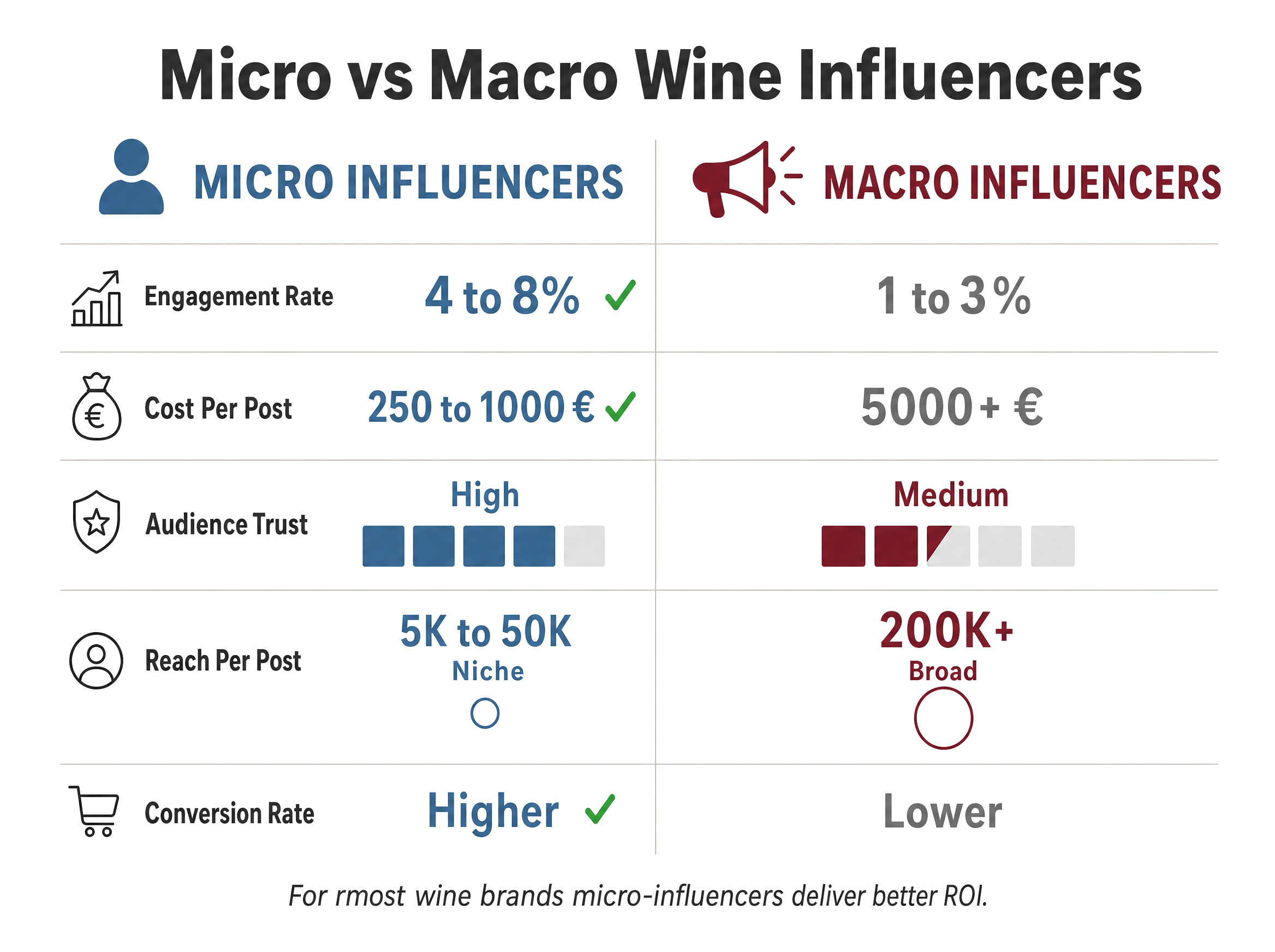
A winery with a $5,000 campaign budget faces one decision before any other: one big name, or many small ones? The instinct is to chase the biggest audience the budget allows. The data, especially in wine, mostly says the opposite. Here is how to think it through.
Definitions and typical rates
The industry slices creators roughly like this:
| Tier | Followers | Typical rate | Best fit |
|---|---|---|---|
| Nano | 1k–10k | $50–$250 per post | Hobbyists and enthusiasts, often paid in product |
| Micro | 10k–50k | $250–$1,000 per post or Reel | The sweet spot for most wine brands: dedicated wine, food or regional-lifestyle creators |
| Mid-tier | 50k–250k | $1,000–$5,000 per collaboration | Semi-professional or professional creators |
| Macro | 250k+ | $5,000–$20,000+, plus agency fees | Professional creators and public figures |
Rates vary by market and format (video costs more than a static post, usage rights and exclusivity cost extra everywhere), but the ratios hold: one macro post buys an entire micro campaign. Rate ranges are consistent with data published by the Influencer Marketing Hub Benchmark Report.
Engagement math compared
Engagement rate falls as audiences grow. That is not an opinion; it is one of the most consistent findings in creator marketing.
Nano and micro accounts routinely see 4–8% engagement, while macro accounts typically sit near or below 1–1.5%, according to HypeAuditor’s State of Influencer Marketing report.
Run the numbers on a $5,000 budget:
| Approach | Followers reached | Engagement rate | Est. interactions |
|---|---|---|---|
| One macro creator | 300k | ~1% | ~3,000 |
| Eight micro creators | 160k combined | ~5% | ~8,000 |
One macro creator is one voice, one audience, one shot. Eight micro creators means eight different audiences and eight authentic voices telling your story in their own words.
Interactions are not sales, but they are the best available proxy for attention that converts. And micro audiences bring a second, less visible advantage: trust. A recommendation from a creator who answers every comment reads as advice from a knowledgeable friend. A macro post reads as an ad, because it is one.
For wine specifically the gap widens. Wine is a taste-and-trust purchase tied to region, food and occasion. The wine-drinking followers of a focused sommelier account are worth many times their number in generic lifestyle reach.
When macro wins
Micro-first is not micro-only. Macro creators earn their fee in specific situations:
- Awareness at launch. Entering a new market where nobody knows your name, one credible big voice can legitimize the brand overnight.
- Prestige positioning. For premium cuvées, association with a recognized wine authority or celebrity sommelier signals quality in a way ten small accounts cannot.
- Content production. Macro creators usually deliver polished, rights-cleared photo and video you can reuse in ads. Factor that production value into the price.
- Retail leverage. Distributors and importers notice big-name collaborations. Sometimes the real audience of a macro post is the trade, not the consumer.
If none of these describes your goal, the macro premium is mostly paying for vanity metrics.
The blended strategy
The approach that consistently performs best for wine brands is a pyramid:
- One anchor voice (mid-tier or macro, if budget allows): credibility, reach and reusable content.
- Five to ten micro creators matched tightly to your buyer profile: the engagement engine and the bulk of conversions.
- A handful of nano enthusiasts and customers: authentic grassroots proof, often for the price of a few bottles.
Run them in the same window so the audiences overlap: a drinker who sees your wine once scrolls past; the one who sees it from three different trusted accounts in two weeks looks for it in the shop.
Practically, sequence it: the anchor opens the campaign and establishes the story, the micro wave follows within days while the theme is fresh, and the nano voices fill the gaps with everyday proof. Reuse flows downhill too: the anchor’s professional content becomes your ad creative, while micro content feeds your own feed and stories for weeks. One budget, three layers of work.
What the data says for wine
Across the wine campaigns we analyze, the pattern repeats: cost per genuine interaction runs three to six times lower for micro creators than macro (based on WineConX campaign data across wine brands), follower-to-customer conversion is strongest for local and regional micro accounts, and blended campaigns outperform single-creator campaigns at every budget level. The deciding factor is never creator size in itself. It is audience fit: how many of those followers are real, of drinking age, in your market and interested in wine.
That audience-fit analysis (scoring creators by who actually follows them, then building the right pyramid for your budget) is exactly what our Influencer Marketing service delivers.