
WineConX Blog
How to Find Wine Influencers on Instagram (2026 Guide)
By WineConX Team ·
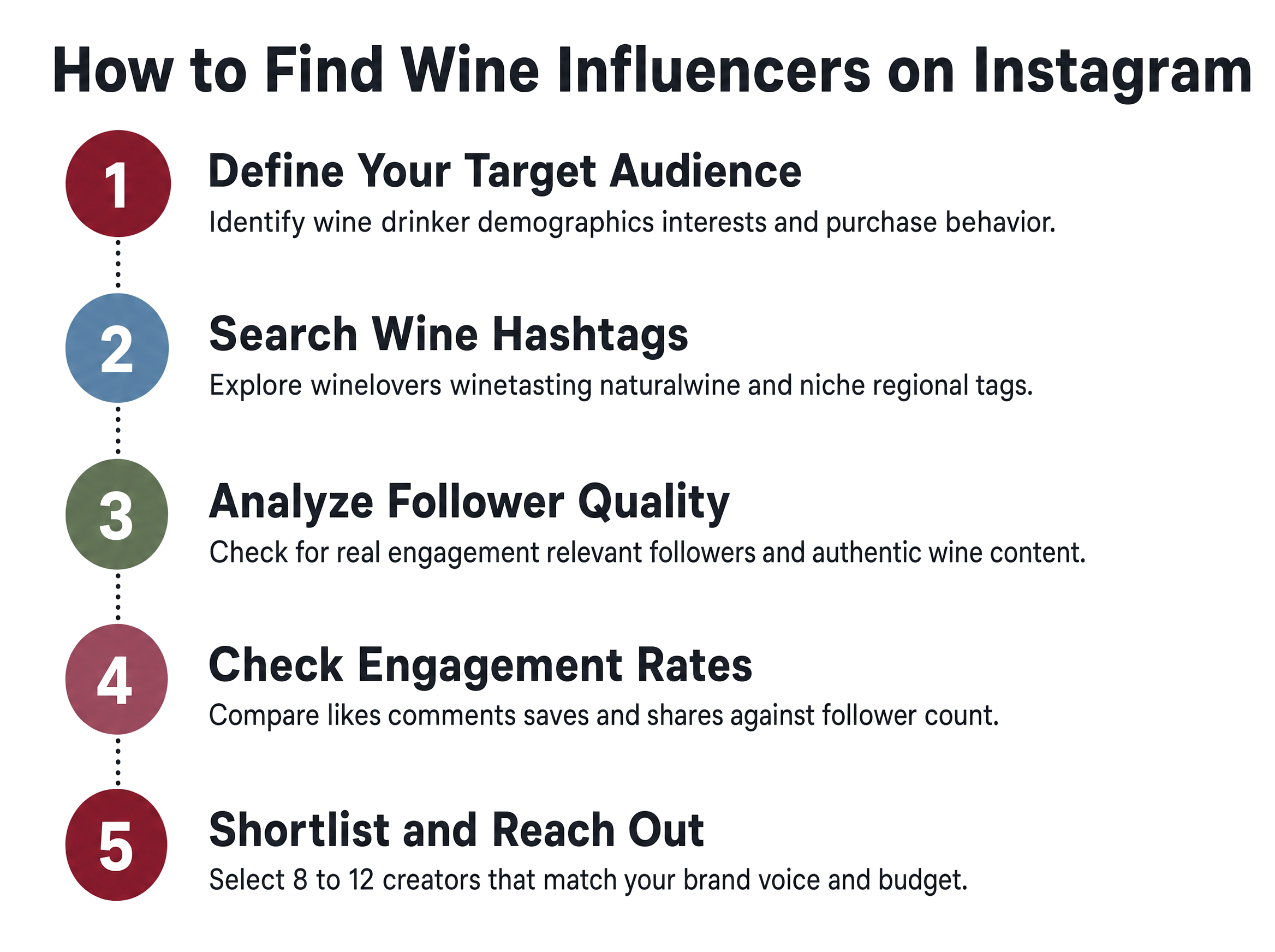
Every winery that tries influencer marketing starts the same way: opening Instagram, typing #wine into the search bar, and scrolling. Two hours later they have a list of accounts with pretty feeds, no idea whether any of those followers buy wine, and a creeping suspicion that this is not how the professionals do it. It isn’t. Here is how to actually find wine influencers who move bottles, not just likes.
Why hashtag search fails
The #wine hashtag has hundreds of millions of posts. Search results surface the accounts that are best at gaming reach: giveaway accounts, meme pages, aggregators reposting stock photography, not the creators your customers trust. Three structural problems make hashtag hunting a dead end:
- Popularity is not relevance. The biggest #winelover accounts often have audiences dominated by other wine brands, bots and giveaway hunters rather than people who buy wine.
- You can’t see the audience. A hashtag shows you the creator’s content, not their followers. The follower list is the product you are actually buying.
- The best creators are buried. A sommelier with 12,000 highly engaged local followers will never outrank a 500k lifestyle account in search, but she will sell more of your wine.
Hashtags are fine for a first glance at the landscape. They are not a selection method.
Follower quality vs follower count
The single most important shift in mindset: you are not buying a creator’s content, you are renting access to their audience. So evaluate the audience.
Follower quality means asking questions like: What share of the followers are real, active people rather than bots or inactive accounts? Where do they live? Can they even buy your wine? Are they of legal drinking age? Do they engage with wine content specifically, or do they follow for the travel photos and skip the tasting notes?
A creator with 15,000 followers of whom 80% are genuine wine-interested adults in your market beats a creator with 150,000 followers of whom 8% fit that description, at a tenth of the price.
Micro accounts should see engagement well above 2–3%, according to HypeAuditor’s engagement benchmarks — though pods and giveaways can inflate the number, so treat it as a screening filter, not a verdict.
5 manual research steps
If you are doing this by hand, here is the process that works:
- Start from your customers, not from search. Look at who already tags your winery, comments on your posts, or posts from your tasting room. Check who they follow. Wine communities are tightly clustered; two hops from your best customers you will find the voices they trust.
- Mine the tagged posts of comparable brands. Open wineries of your size and style in neighboring regions and check their tagged photos and mentions. Creators who work with comparable brands are pre-qualified for yours.
- Go local before you go big. Search location tags: your wine region, nearby food cities, wine bars that pour your bottles. Local creators convert dramatically better for visits, club sign-ups and regional distribution.
- Build a longlist of 30–50 and score it. For each account record: follower count, average likes and comments on the last 10 posts (skip giveaways), audience location if visible, and how often they post wine content. A simple spreadsheet beats memory.
- Watch stories for a week before outreach. Stories show the unpolished relationship with the audience: do people reply, answer polls, ask where to buy? That interaction is what you are paying for.
Budget honestly: done properly, this is 10–20 hours of work for one campaign shortlist, which is exactly why matching platforms exist.
Vetting checklist
Before you send a single DM, run every shortlisted creator through this checklist:
- Engagement sanity check: comments should be specific (“Where can I find this cuvée?”), not walls of emoji from the same accounts.
- Growth curve: steady growth is healthy; vertical spikes usually mean giveaways or purchased followers.
- Audience geography: ask for a screenshot of their audience insights; any professional creator will share city/country splits.
- Age profile: essential for alcohol. If a meaningful share of the audience is under legal drinking age, walk away.
- Brand history: scroll six months back. Have they promoted six different wine brands in six months? Their recommendations are wallpaper. None at all? You’ll be the test case.
- Disclosure hygiene: do they mark ads properly? A creator who hides #ad today is a compliance problem for you tomorrow.
When to use a matching platform
Manual research works for one small campaign. It stops working when you want to compare dozens of candidates on data you cannot see from the outside: real follower-quality analysis, audience overlap with your actual buyer profile, bot detection at scale.
That is the point of AI-assisted matching: instead of judging creators by their grid, the system analyzes their followers (demographics, activity, interests, authenticity) and ranks creators by fit with the audience you want to reach. What takes a marketing team two weeks of spreadsheet work happens in minutes, with data no manual process can access.
Finding, vetting and ranking wine creators by follower quality is exactly what our Influencer Marketing service does, with matched creators, managed outreach and campaign reporting included.